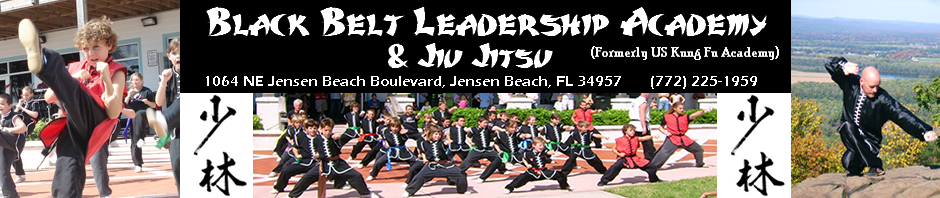
We teach Shaolin Kung Fu & Jiu-Jitsu
Shaolin Kung Fu is one of the oldest and most respected of the martial arts, Chinese weapons, sparring and grappling. Although there are many styles of Kung Fu available we teach Long Fist, Eagle Claw, and also offer classes in Brazilian Jiu-Jitsu. It’s important when choosing a martial arts school to pick a style that resonates with you.
LONG FIST:
Chángquán (simplified Chinese: 长拳; traditional Chinese: 長拳; pinyin: Chángqúan; literally “Long Fist“) refers to a family of external (as opposed to internal) martial arts (kung fu) styles from northern China.
The forms of the Long Fist style emphasize fully extended kicks and striking techniques, and by appearance would be considered a long-range fighting system. Long Fist uses large, extended, circular movements to improve overall body mobility in the muscles, tendons, and joints. Advanced Long Fist techniques include qin na joint-locking techniques and shuai jiao throws and takedowns.
The Long Fist style is considered to contain a good balance of hand and foot techniques, but in particular it is renowned for its impressive acrobatic kicks. In demonstration events, Long Fist techniques are most popular and memorable for their whirling, running, leaping, and acrobatics. Long Fist’s arsenal of kicks covers everything from a basic front toe-kick to a jumping back-kick, from a low sweep to a tornado-kick.
Traditional Shaolin Kung Fu, as mentioned above, is part of the long fist (Chang Quan) family. The movements, like stepping, kicking and punching can be short, simple and versatile. While fighting in the Shaolin style, one advances and retreats in a straight line, making the style simple, fast and effective.
EAGLE CLAW:
Ying Jow Pai (Chinese: 鷹爪派; pinyin: yīng zhǎo pài) is a style of Chinese martial arts known for its gripping techniques, system of joint locks, takedowns, and pressure point strikes, which is representative of Chinese grappling known as Chin Na. The style is normally attributed to the famous patriotic Song Dynasty General Yue Fei. Popular legends states that he learned martial arts and archery from a Shaolin Monk named Zhou Tong after his original spear master and martial arts teacher, Chen Guang died.
To train his soldiers, General Yue Fei created the “108 locking techniques”. The footwork included low kicks, sweeps, and trips to disrupt the opponent’s balance. His soldiers continously fought and defeated the Jurchens, Siberian tribes people, invading northern China earning a fierce reputation for “Ying Kuen” or Eagle Fist.
Years later, during the Ming Dynasty (c. 1368 AD), a Shaolin monk named Lai Chin combined General Ngok Fei’s 108 fighting techniques with the kicking and footwork of the northern Fanzi System. Today, both kung fu styles are blended to form one complete system known as “Ying Jow Pai.”
BRAZILIAN JIU-JITSU:
Brazilian Jiu-Jitsu (Portuguese pronunciation: [ʒuˈʒitsu], English: /dʒuːˈdʒɪtsuː/) is a martial art, combat sport, and a self defense system that focuses on grappling and especially ground fighting. The art was derived from the Japanese martial art of Kodokan judo in the early 20th century, which was itself developed from a number of schools (or Ryu) of Japanese jujutsu in the 19th century.
It teaches that a smaller, weaker person can successfully defend against a bigger, stronger assailant by using leverage and proper technique—most notably by applying joint-locks and chokeholds to defeat the other person. Brazilian Jiu Jitsu can be trained for sport grappling tournaments (gi and no-gi) and mixed martial arts (MMA) competition or self defense. Sparring (commonly referred to as ‘rolling’) and live drilling play a major role in training, and a premium is placed on performance, especially in competition.
– – – – – – – – – –
We are a charter member of Warriors Fusion (formerly known as the National Association of Chinese Martial Arts). This organization is instrumental in spreading traditional Chinese Martial Arts throughout the east coast.
For our Brazilian Jiu-Jitsu students who wish to compete, we attend the North American Grappling Association tournaments. They host four tournaments a year in Florida.
4 Responses to Styles